Pushkar Camel Trade Fair, 2025
With a faint haze under the moth infested street lights and a gripping presence of inevitable chill in the weather, I embarked upon my journey of exploring the Pushkar Camel Trade fair in Rajasthan, India. Situated in the Ajmer district of Rajasthan, on the edge of the Aravalli Hills, Pushkar hosts one of the largest camel trade fairs in the world. What began centuries ago as a simple livestock market for local traders to buy and sell has shaped itself into a gathering of huge masses of visitors every year. From pilgrims to foreign tourists this bubbling amalgamation of humanity is a sight to behold. The trade fair begins with the commencement of Karthik month every year and continues till the holy occasion of Karthik Purnima which falls at the end of October or the beginning of November, according to the Gregorian calendar.
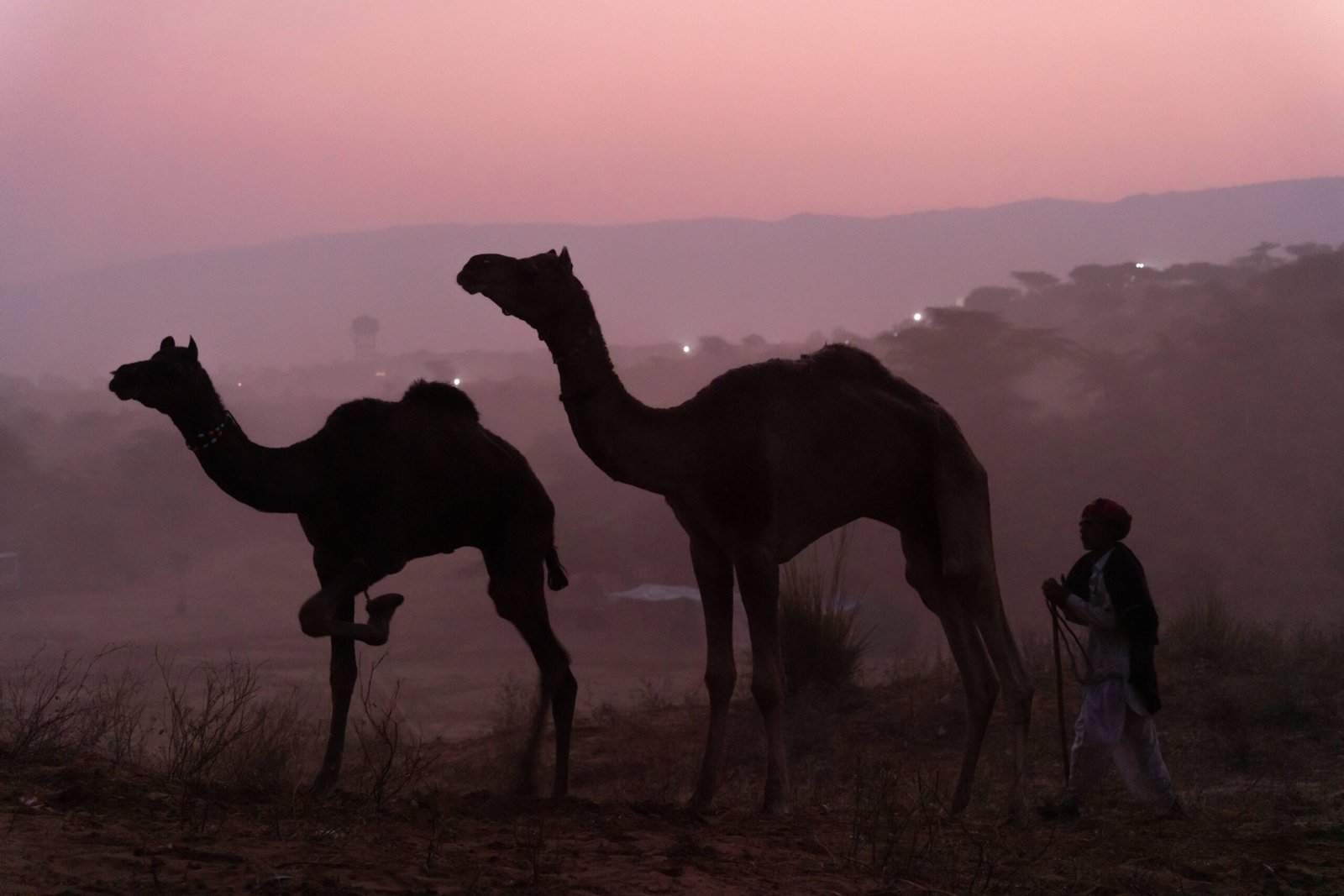
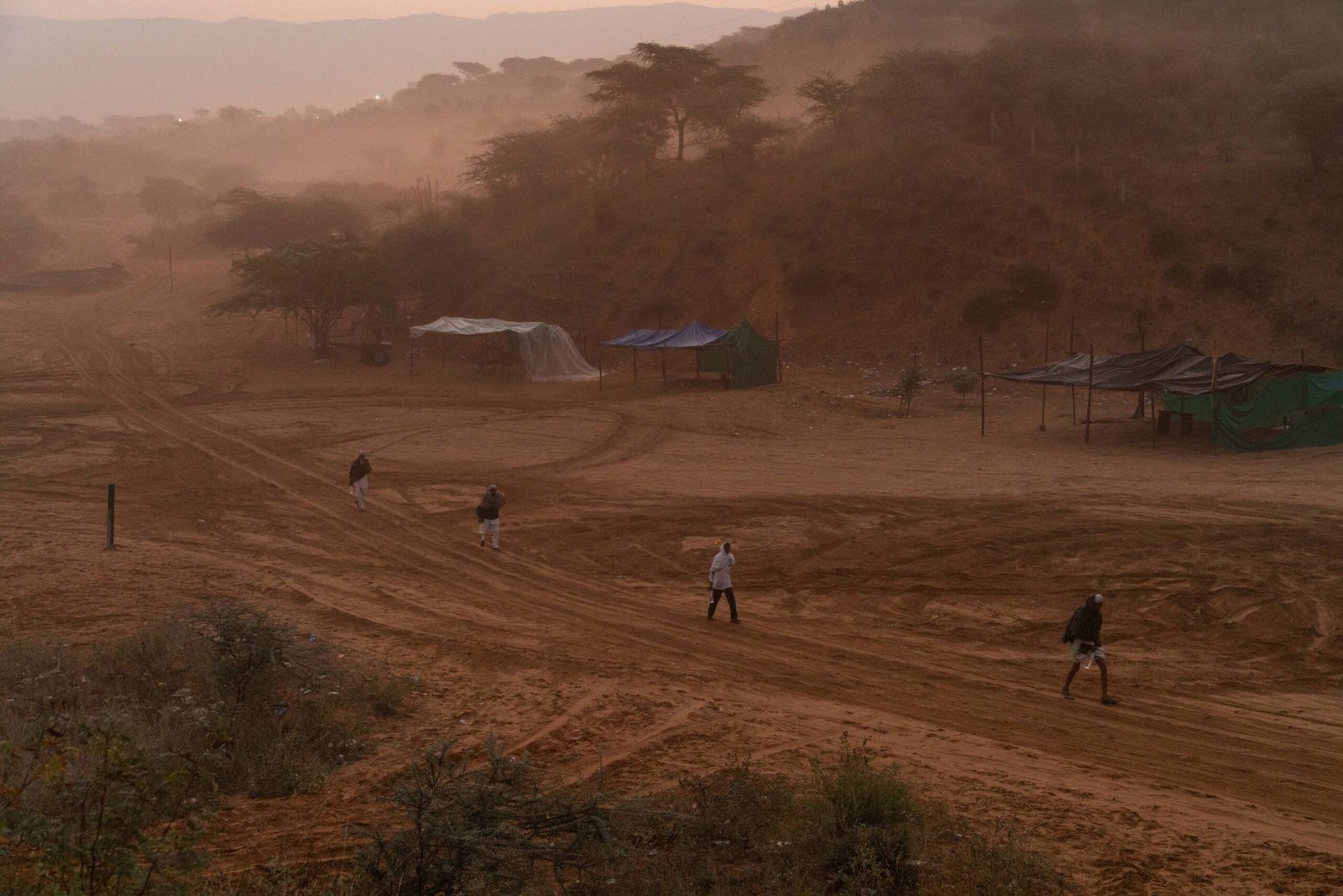
The sun was yet to shake off its slumber. The sky, in all its eagerness, adorned a thin veil of lilac. The air was crisp and patient. Everything around me was carefully hidden under the cloak of silence. An uneven sandy road slithered through the ever-watchful stables on either side. As I trudged on, I could hear the residents of these stables snorting and nickering at my presence. It sounded as if hundreds of railway engines cooling themselves down after a long journey. At the end, the road opened its jaws and disappeared into a vast ocean of sand. Huge waves of sand dunes stood petrified under the spell of eternity. As I inched closer, I could feel the presence of a creature, so ancient, that the land itself, in an act of deep deference, denied its own nature and broke its own binding to become a shallow, shifting sea of reverent sand, a perpetual, golden altar spread wide for their padded steps. I stood among these huge animals towering over me like dark mountains. They seemed like messengers of some distant planet who had come down to bear witness to the shifting sand of time and stand as honourable sentinels against the claws of modernity.
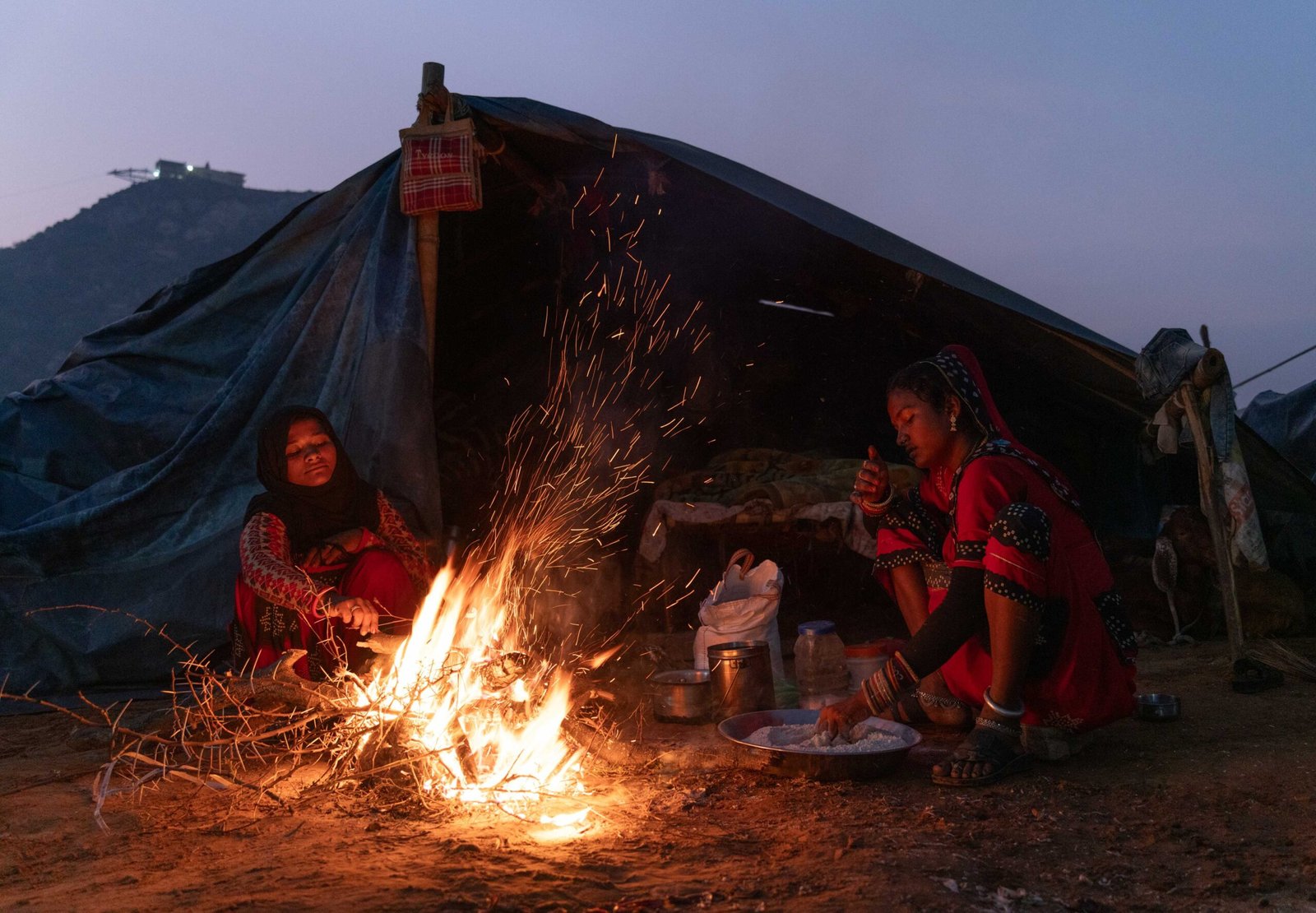
Gradually the eastern part of the sky bathed in the first blush of rose and unveiled the rising, molten gold. Beyond the resting gentle giants, there were small tents scattered across the desert ground. They looked like a family of dwarves sleeping with their pointy hats on. In front of some tents, cooking fires glowed through lavender dust. Few women were baking bread for the day ahead. Their ornaments scintillating with the flames. Distant voices of some herders passed by my ears as they plodded on towards a group of recently awakened camels. The wind had picked up its speed, blowing shimmering dust across the plain.
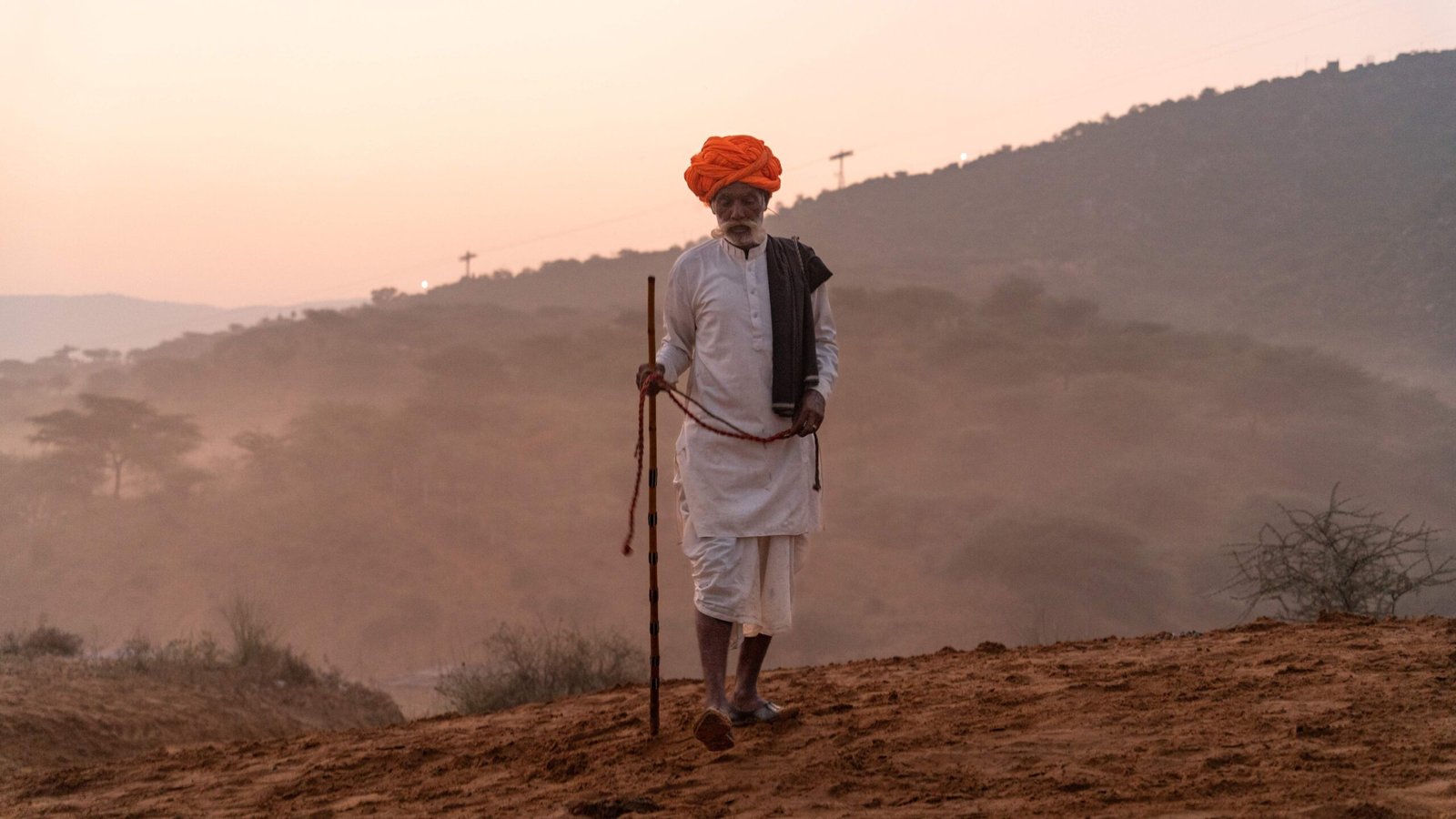
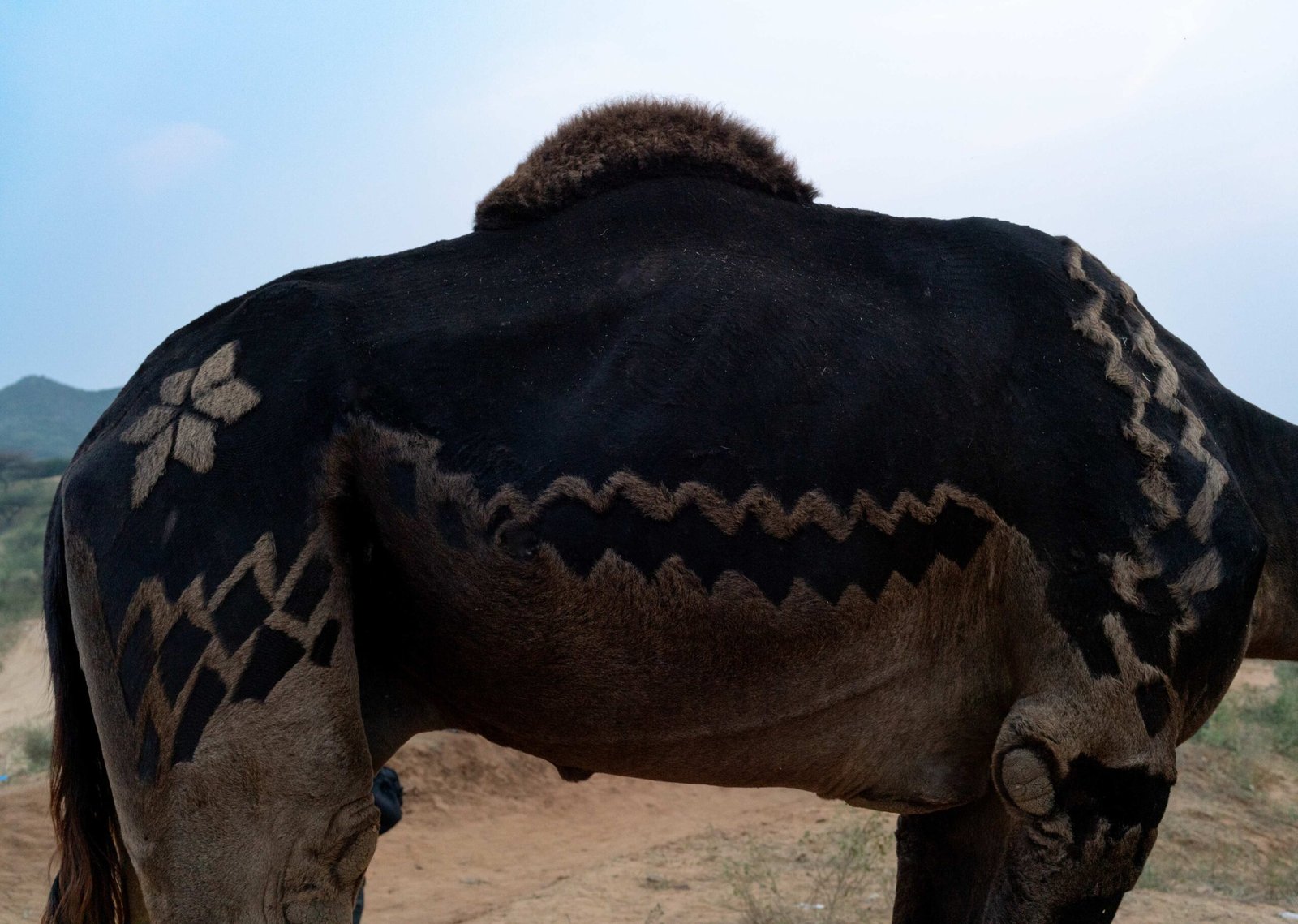
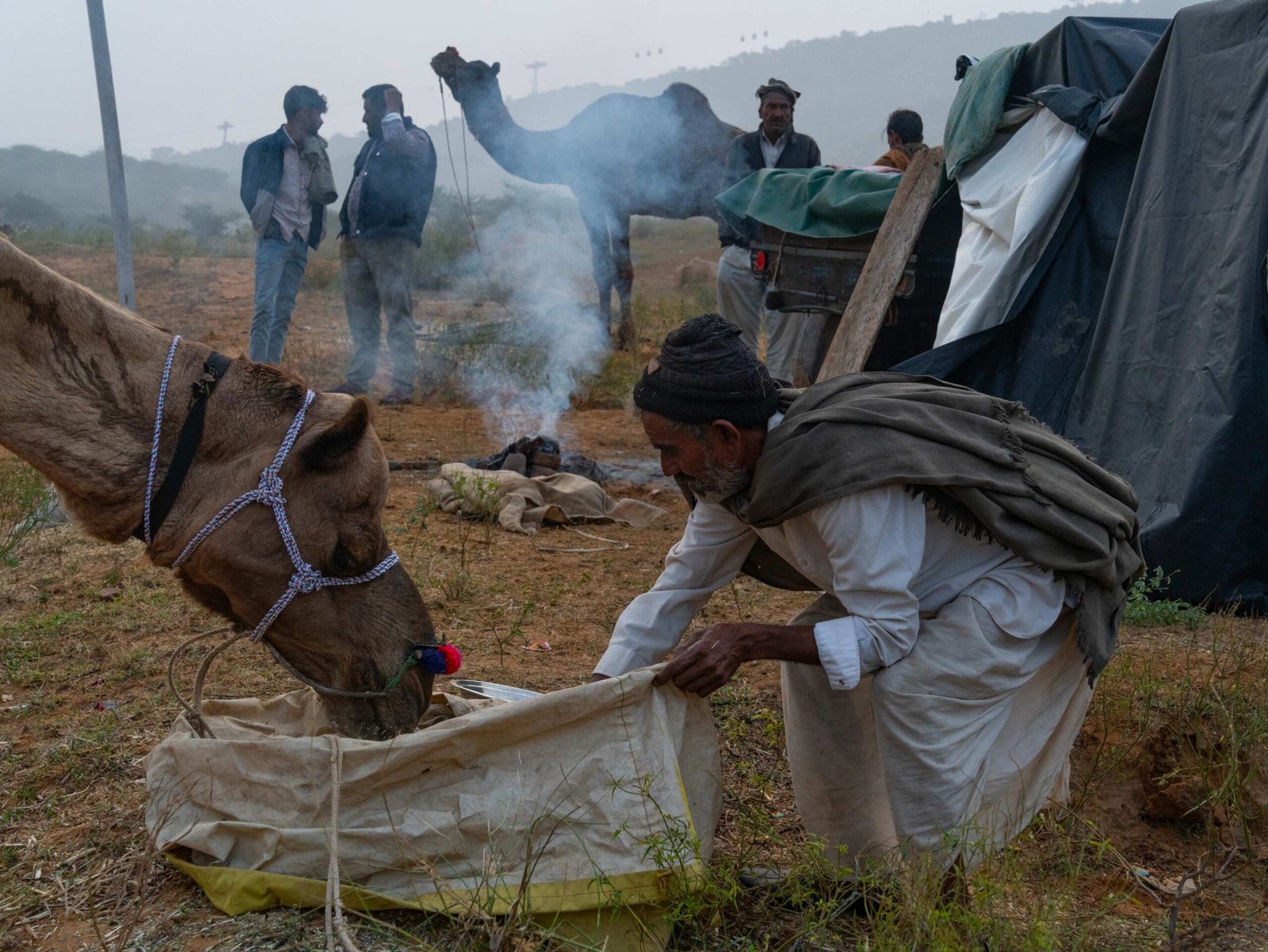
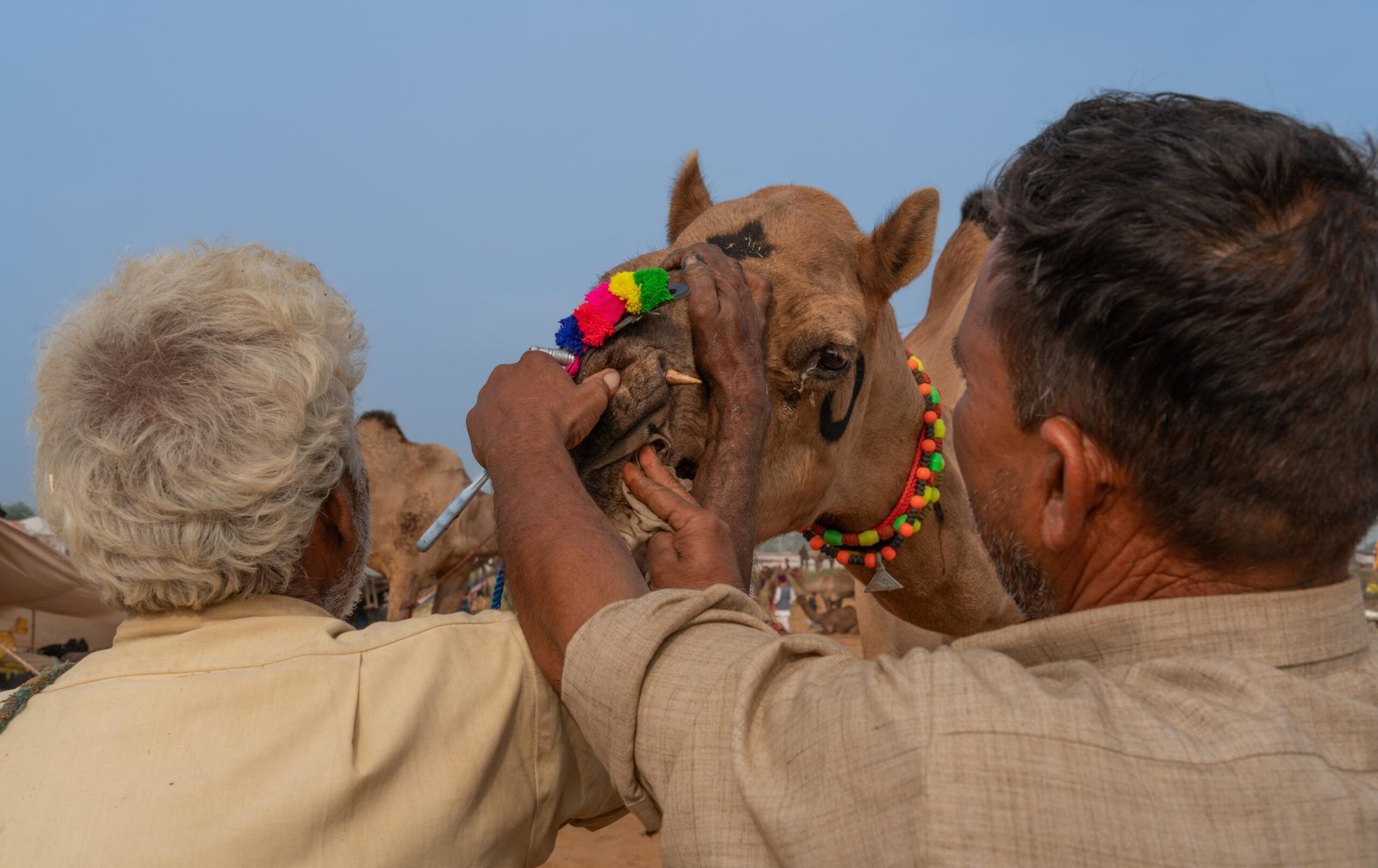
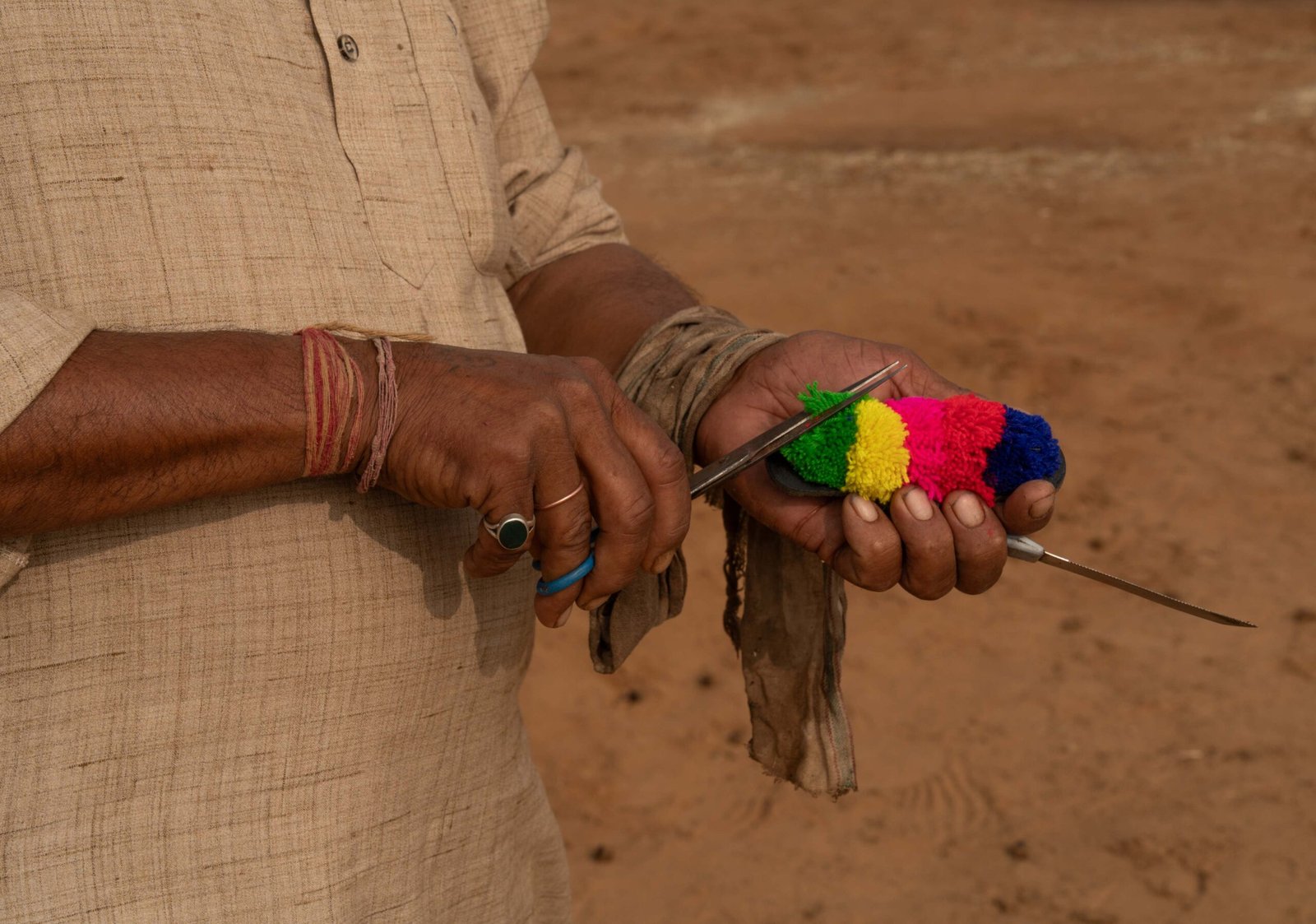
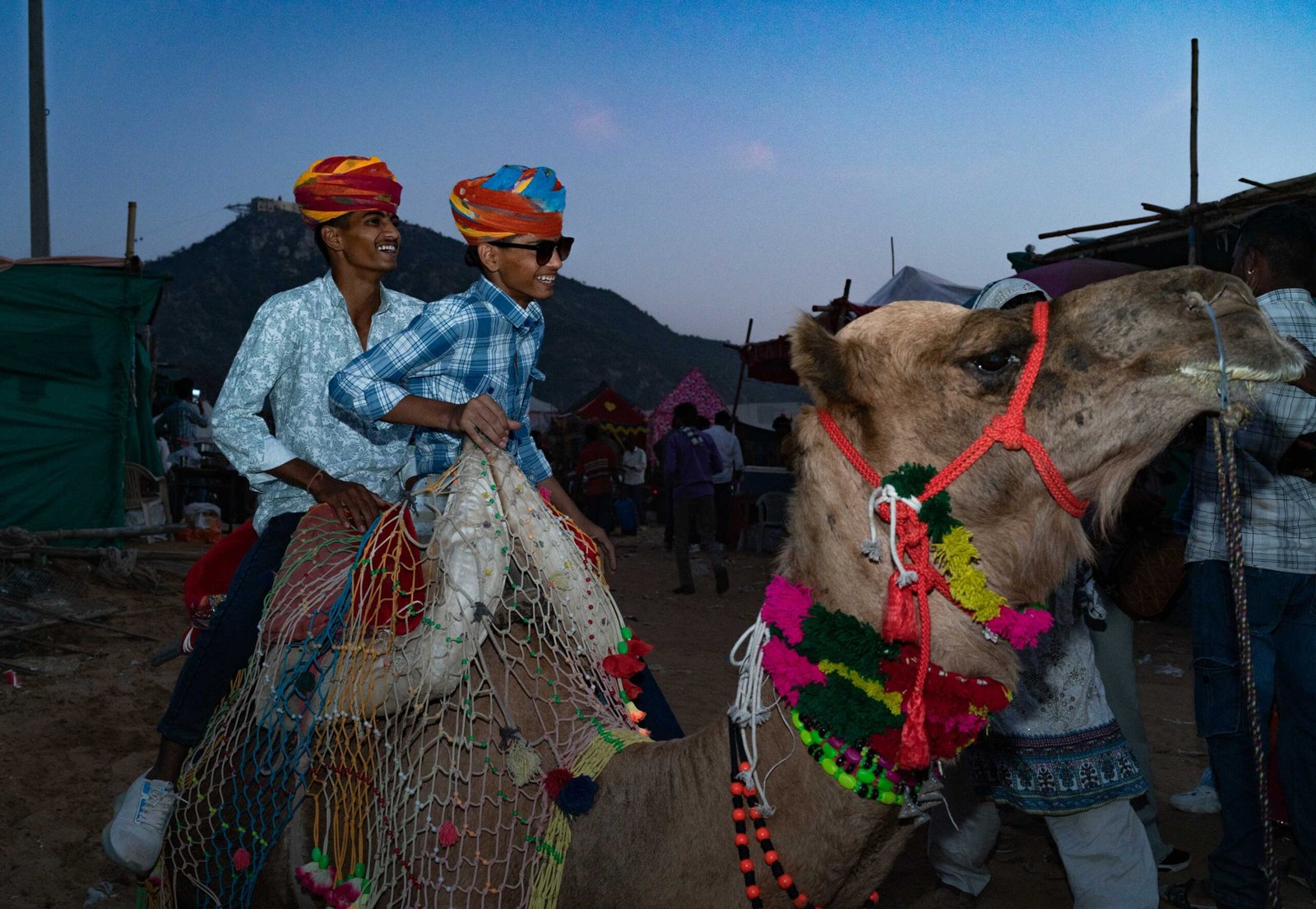
The whole place rapidly came alive with each passing hour. More traders gathered and started their daily routine of preparing the camels. At first they unloaded a sack of dry grass and grains on the sand, carts, and on other sacks for the camels to eat. While the camels were busy consuming their first meal, the traders brushed their fur coat with bundles of hay to aid them in shedding or to rub off insects and allow them to spend some bonding time. After the grooming session, they were adorned with sequins, bells and beaded necklaces across their necks. Colourful cloth balls were used to embellish few nose rings for the camels, which added to the decorations. Several artisans meticulously shaved and trimmed the camels’ fur into complex designs such as geometric patterns, floral motifs and even narrative scenes. Sometimes the camels were given a special medicine to maintain their health. It was also evident by the fact that animal health care trucks were present at all times. These activities had the main purpose of showing off the camels’ health and beauty to potential buyers. Several local farmers flooded the area to buy, sell and barter livestock. The herders themselves dressed in traditional attire with vibrant turbans (dastar), loose white Angrakha kurta, and dhoti. Their faces brimmed with confidence and honour as they proudly presented their prized possession of livestock and welcomed the opportunities.
The fair couldn’t be complete without the abundance of competitions and activities, offering visitors an immersive experience. From moustache competitions, where men competed to show off their well-maintained, long moustaches to turban-tying contests, the fair was filled with quirky events that celebrated local traditions. The women were not just spectators. They too professed the culture in the most beautiful and elegant manner. Adorned in coruscating ankle-length skirts called lehenga or ghagra and bright-coloured veils called odhni or chunar draped over the head and shoulders, they blew life into every beat of the drums and every clatter of the claps. With an elaborate representation of the Kalbelia dance, the richly ornamented women swirled in their flowing skirts to those hypnotic beats while musicians played traditional instruments like dholak and ektara, their melodies echoing the vastness of the desert.
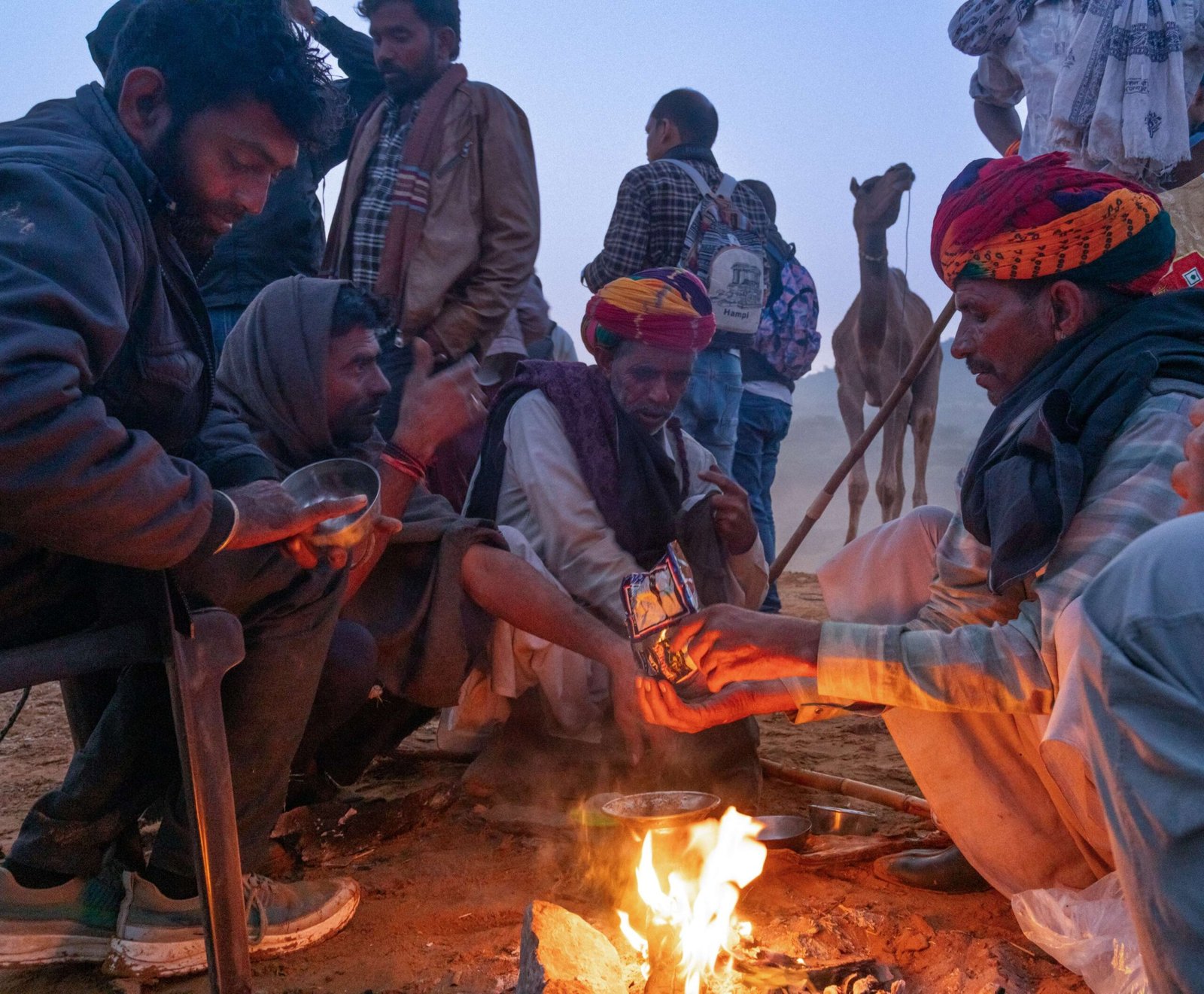
When the day began preparing its last rites, when the tide of eager buyers started to die down, the place again filled with a complacent weariness. In the vast, churning space where the camels had been tethered, silence was gaining purchase. The men, their faces etched with the dust were banking the day’s earnings. The camels and the horses were guided away from the fair ground, their heavy, soft pads crunching across the drying earth, leaving only the smell of warm wool and trampled fodder behind. As the golden rays bled into deep terracotta and ash-rose along the western ridge, smoke began to rise at the edge of the stretched horizon. Campfires for warmth and brick stoves for food. Villagers, wrapped in chequered shawls, flocked around the fire and hunched over like moths around hanging light bulbs. I could hear the sound of metal bowls being struck and the steady, rhythmic scrape of sugar being dissolved. Ghee sizzled; a rich, intoxicating scent of deep-fried syrup soaked pancakes (Malpua) and strong, spiced tea spread, a communal signal that the work was over and the ritual of dinner had begun. Sitting on a rock, feeling the baked winds of fire and sipping on hot tea, I looked up. The vast emptiness over my head had changed into a deep blue gown with a tinge of retreating inky velvet. Thousands of pinpricks like hanging chandeliers scattered across the sky. I felt, in a similar night like this, hundreds of years ago, nomads and villagers and so many people might have traversed this empty desert land with nothing but the curse of freedom and a map of star-studded sky.
But the reverence was inseparable from a mounting, quiet anxiety.
The truth was visible in the thinning lines of tethered animals, in the dwindling ambition of the auctions, and in the faces of the older buyers, who spoke less of future trade and more of past glory. The lifeblood of the fair, the camel, the very reason for this gathering was losing ground. The change was evident from the spaces that used to be filled with camels were now occupied by the concrete skeletons of resorts under construction. Younger generations from herding families were increasingly moving to cities or seeking alternative livelihoods, while the traditional roles of camels in farming and transport were being replaced by cars and modern machinery in rural villages. The camel population had further dwindled due to shrinking grazing lands, a consequence of both environmental pressures and changing land use patterns.
I was there standing on a soil blessed with a rich history of culture and tradition, pride and honour, perseverance and resilience. The struggles and joys of these herders, the glorious presence of these magnificent camels, and the warm, gracious reception from the nomadic families formed a deep well of epiphany and respect in my mind, heart and soul for the land and the people. And yet, I was burdened by the knowledge that this immense, incredible spectacle may someday be remembered less as a living market, and more as a flickering ghost of its former self, swallowed by the relentless, homogenizing glow of modernity.