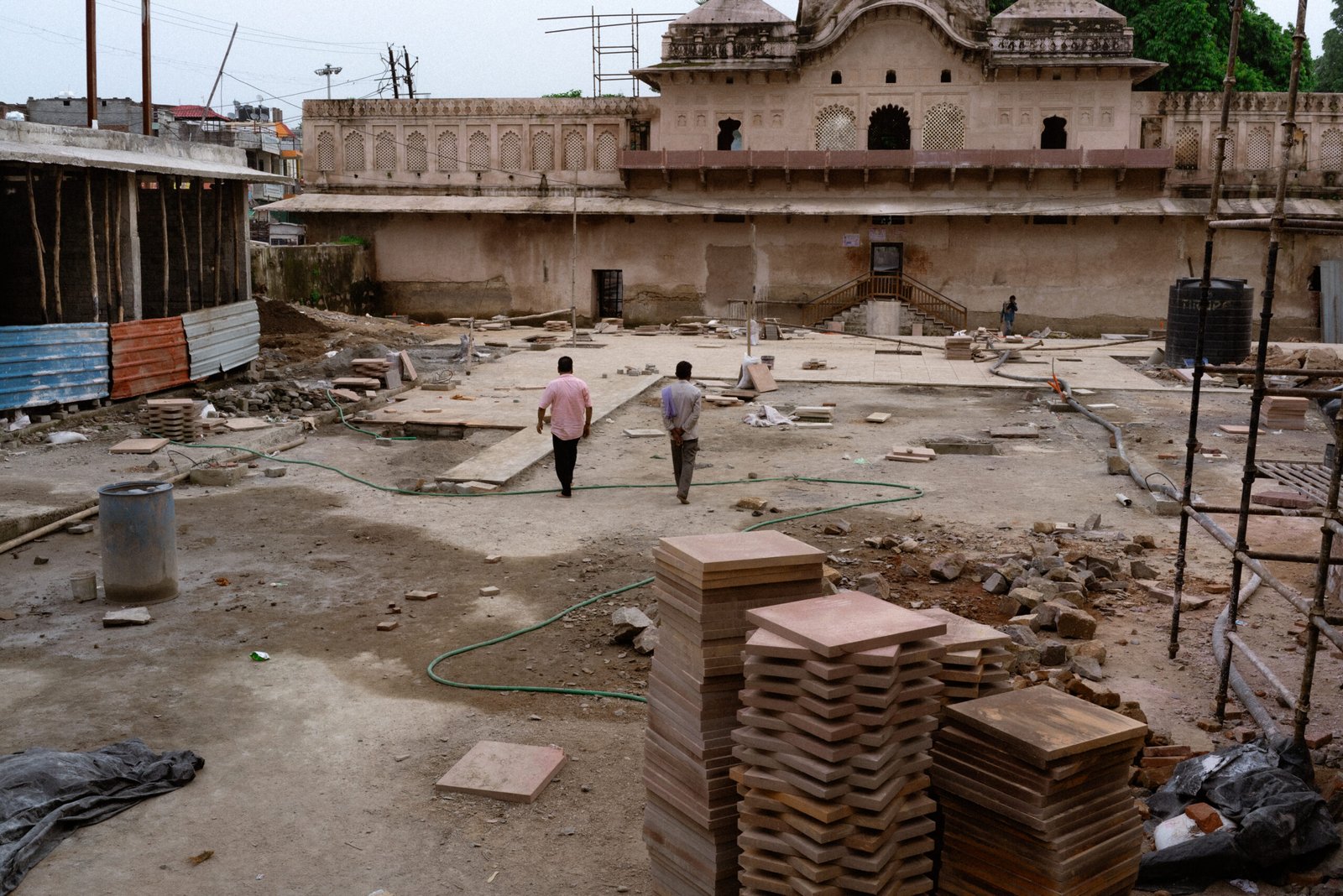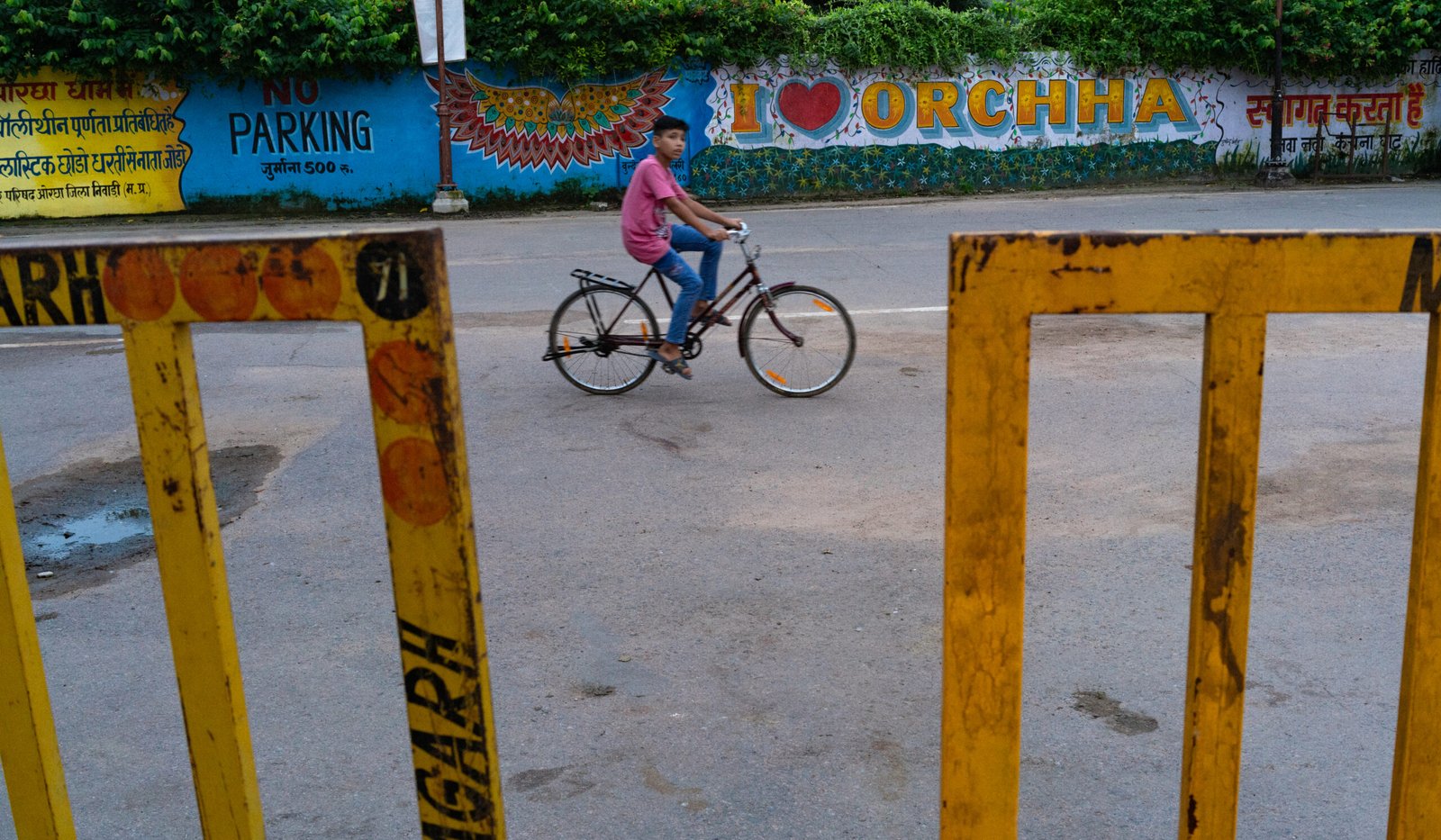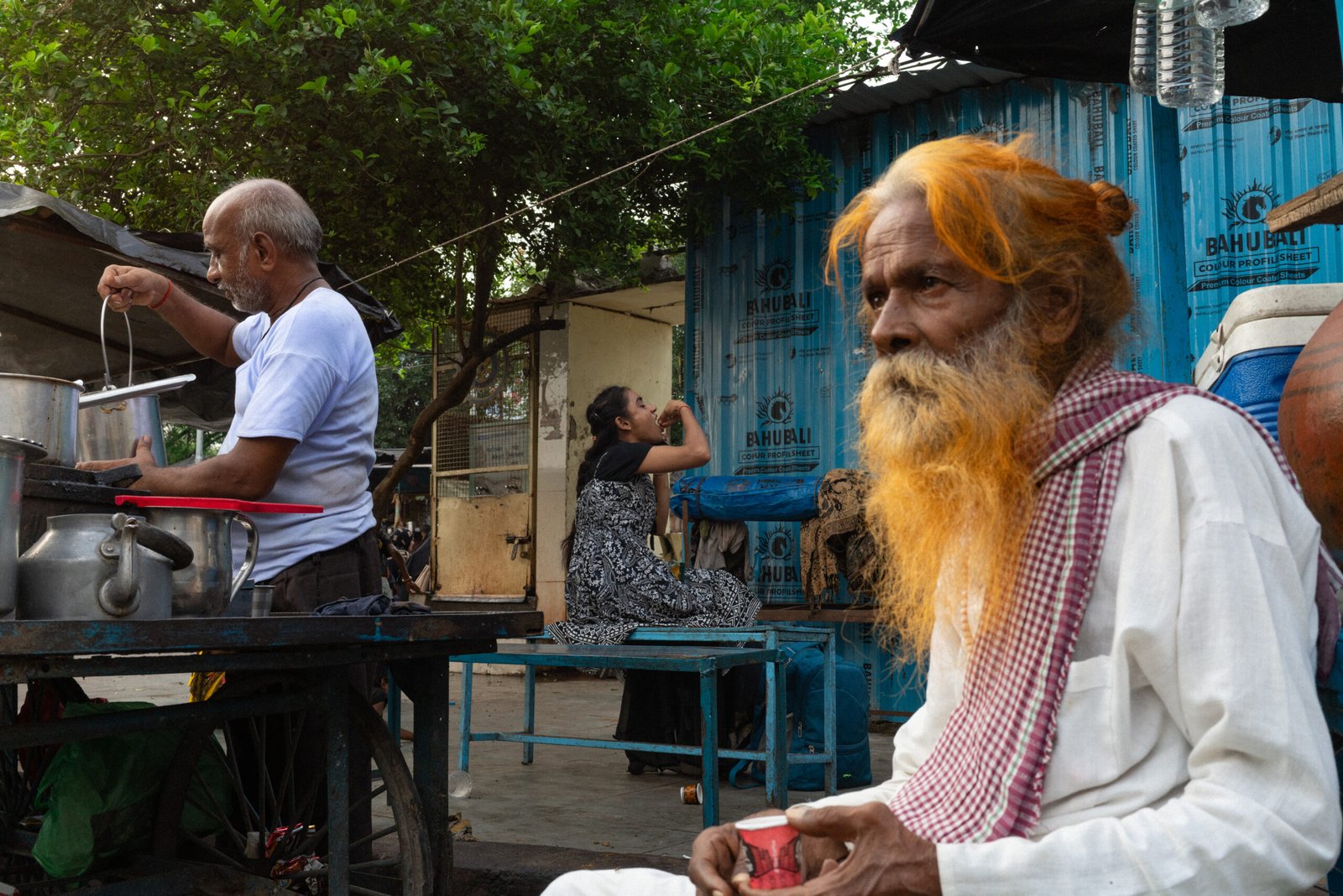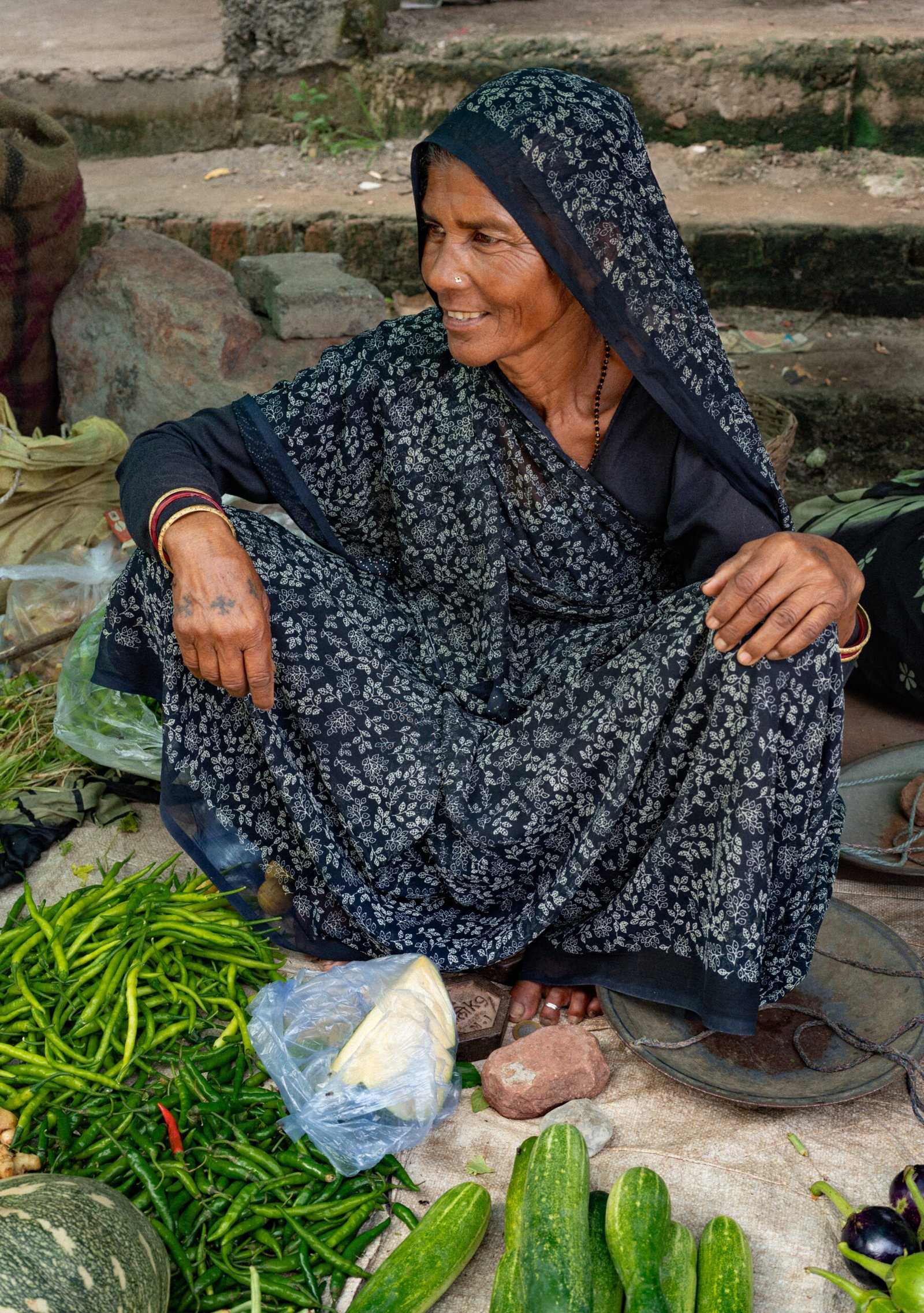
Nestled in the north of Madhya Pradesh, on the banks of the river Betwa, Orchha is a small town full of life and history. It was founded in 1531 AD by the Bundela chief, Rudra Pratap Singh, who became the first King of Orchha. Later, it was captured by the imperial forces of the Mughal Army, led by Prince Aurangzeb, in 1635 AD. Orchha is the only place in India, other than Ayodhya, where the Hindu deity Lord Rama is the sole King of the town. It is evident from the fact that even today, the guard of honour is given to Him by the police every day at the famous Ram Raja Temple. This aspect makes Orchha a unique place for devotees of Lord Rama.
My short visit to Orchha was based on a street photography workshop. Even though I had never heard the name of this place before, the moment I stepped on its soil, I got a strong sense of familiarity. The living air was filled with laughter and the smell of spices. Store-fronts adorned with flowers. One could hear the devotional songs floating from far, which seemed sweeter than any melodies. All the time I passed through the streets surrounding temples and palaces, I could feel the aching joys of devotees, the innocent mischief of children, and a strong sense of community among people. Ornamented with harmless curiosity and hopeful smiles, they felt like home.
Early morning. The first day of my workshop. I couldn’t get a good night’s sleep the previous day. I was too tired from my long journey from Kolkata to calm my mind enough to fall asleep. I woke up with my head feeling a hundred kilos. As I stepped out of my room, I could sense the peaceful calmness around me. As I got into the car that was taking us to our first destination, I could feel a heavy weariness on my shoulder. However, the moment we reached, and I got to see the deserted streets of early morning, I immediately shook it off. It was a market surrounding the Ram Raja Temple. The sun couldn’t be seen anywhere. There was a thick band of cloud hovering over our heads. The air was suspended and humid. The silence of the night still lingered along the streets, intermittently broken by the long, awakening cries of a rooster in the distance. Walking up the wet, puddled streets towards the market, I saw a group of four to five middle-aged women waiting by the road for a lift. Another group was filling up buckets beside a tube-well on the opposite side. The town had not yet shaken off its deep slumber. Streets were sparingly littered by people.
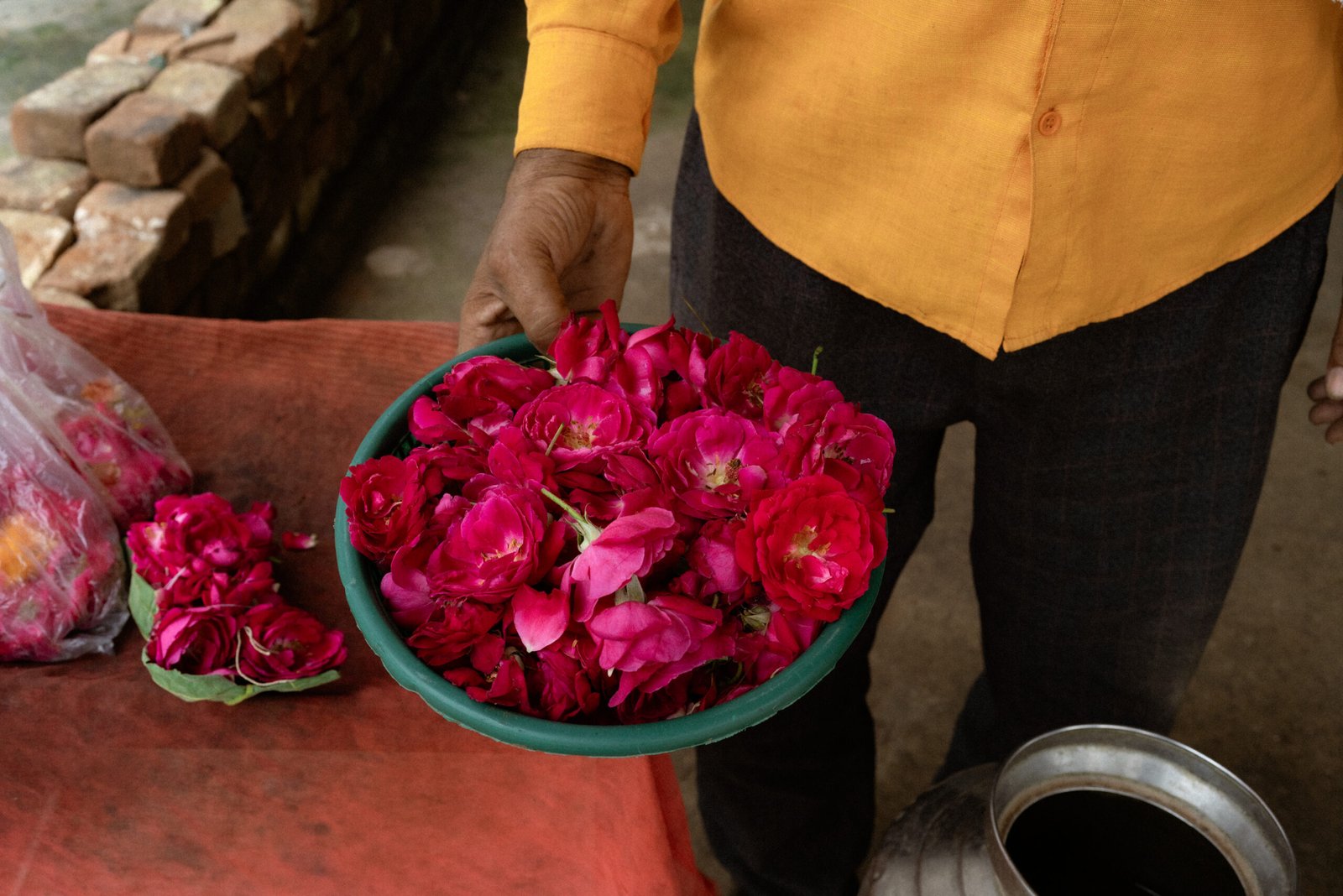
As I trod lightly through the alleys of the market, I could see the shops gradually opening, shopkeepers washing the store-fronts and then lighting an incense stick to start their day. More and more vendors started arriving, forcing the market to come alive. There were flowers and sweets for offering, different types of ornamentations for morning aarti (prayer), fruits, vegetables, more flowers, candles, diyas, food stalls for breakfast, and a swarm of devotees. As the prayer bells started ringing, the devotees quickly gathered around the gate of the temple, closed their eyes, and indulged themselves in a sweet chant. The unravished devotion engulfed the whole market in a trance. It seemed like the people were moving at the rhythm of the bells; and the temple, the source of a beating heart.
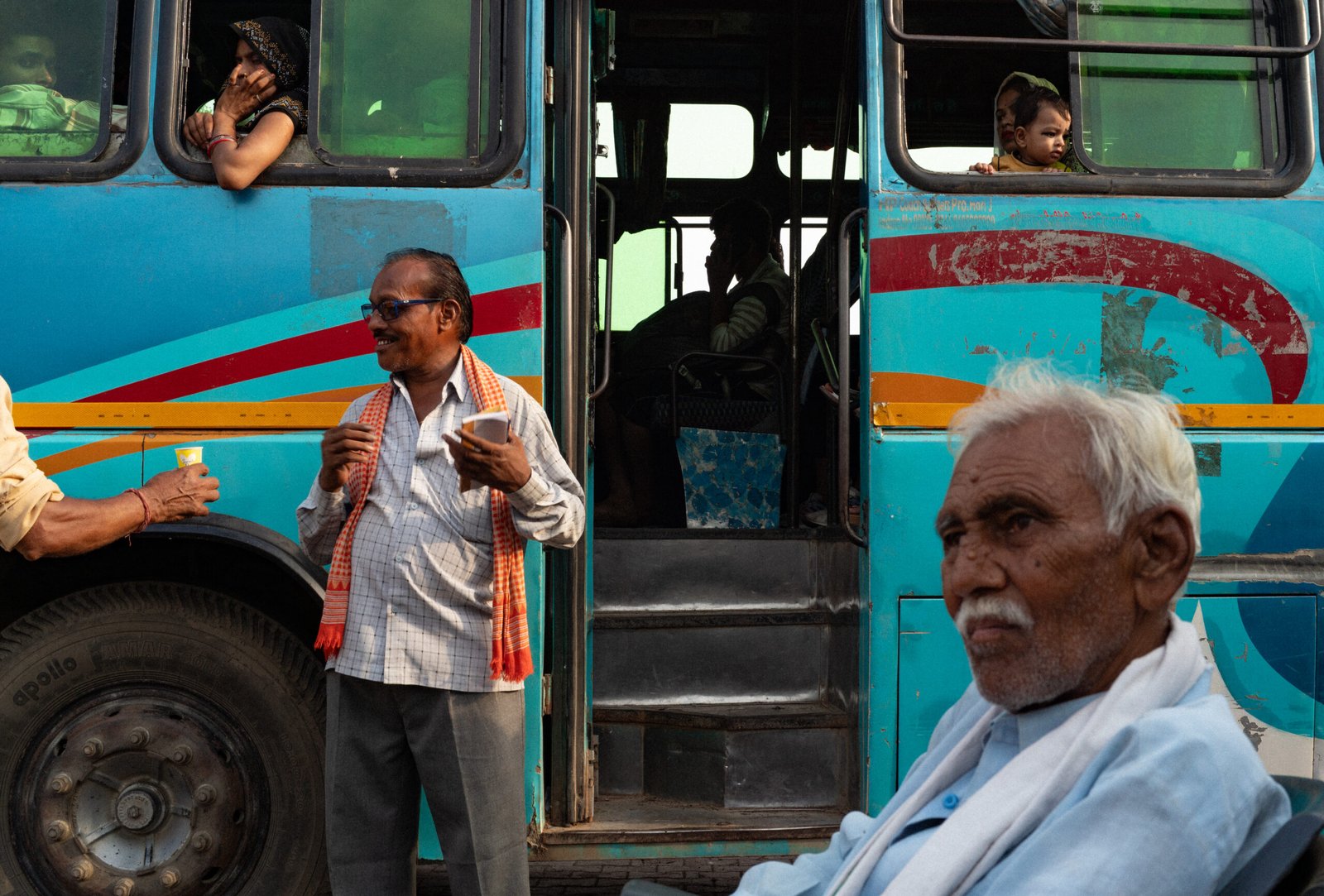
The second day was much more dynamic. It had no trace of the calm and serene beginning of the first day; rather, it was like a sucker punch in the gut. Unexpected and breath-taking. It was decided that on the second day, we would explore the Jhansi bus stand in the morning, which was about 15 kilometers from the town, and come back to walk along the ghats of Betwa River in the evening. When we arrived at the bus stand, it was already a couple hours past sunrise. There were people everywhere. From the streets to the parking lot, the bus stand felt like a restless beast, groaning under the weight of the morning rush. Engines growled and hissed, thick plumes of smoke curling into the pale blue shell of a sky as buses lumbered in and out like weary giants. Hawkers weaved through the crowd, their voices slicing through the clamour, selling steaming cups of chai and breakfast wrapped in old newspapers. Passengers spilled out of buses, some bleary-eyed from overnight journeys, others fresh-faced and eager to depart. Some were waiting by the benches under a shed with their emotional support luggage, nagging kids, and out-of-reach network phones, while others dashed among bathing buses trying to match the bus number. Drinking it all in, I was there amidst the orchestra of sound: the sharp cry of conductors calling out destinations, the screech of brakes, the chatter of concerned families, the lively gossip among the customers at tea stalls, the slosh of water used to clean the bus tyres, and the low hum of life in motion. It was a chaos that danced to its own rhythm, a daily ritual of movement, purpose, and human tide.
When the sun was finally preparing for its burial, we went out to explore the ghats of Betwa River. The river is a tributary of the holy Yamuna River that flows north-east through Madhya Pradesh, Orchha, before entering Uttar Pradesh. It is also known as the ‘Ganga of Madhya Pradesh’ and serves as a major source of water for agricultural lands. It holds an immense cultural value among the native people. Historically revered as ‘Vetravati’, the river can be traced back to the Vedas and the holy epic of Mahabharata.
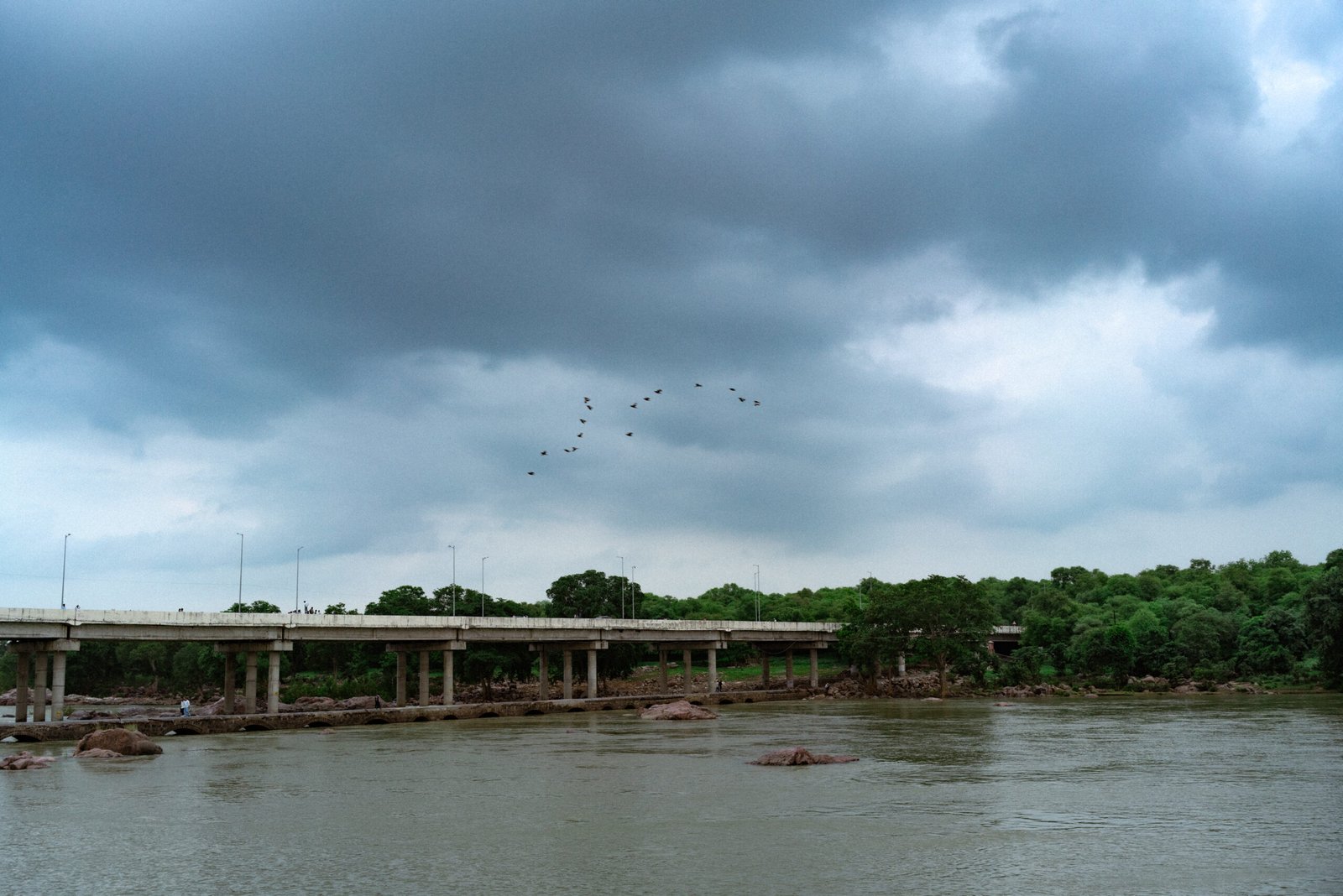
Strolling along the road that lined the ghats, I could feel a nippy breeze brushing over my face. The ghats stretched long and wide like ancient stone steps, their edges worn smooth by countless feet and whispered prayers. The river flowed slow and deep, its surface a smudged mirror to the sky above, where thick, dark clouds rolled in with quiet authority, smothering the sun. It was a brewing cauldron of blues and greys, churning with twirling waves of cloud that unfurled those hidden, silent tempests. The wind dropped with a sudden urgency, and a blueish haze shrouded the distant boats.
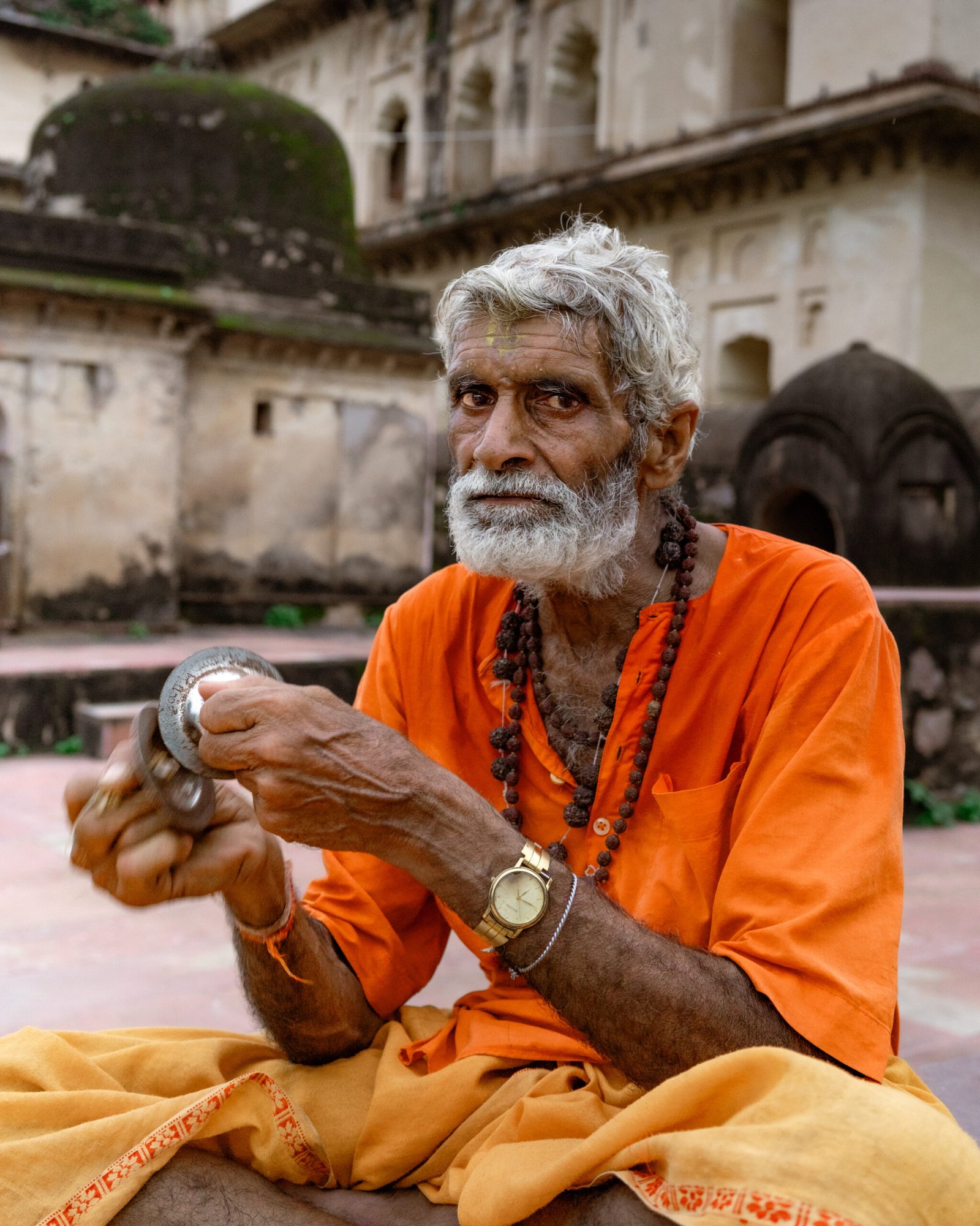
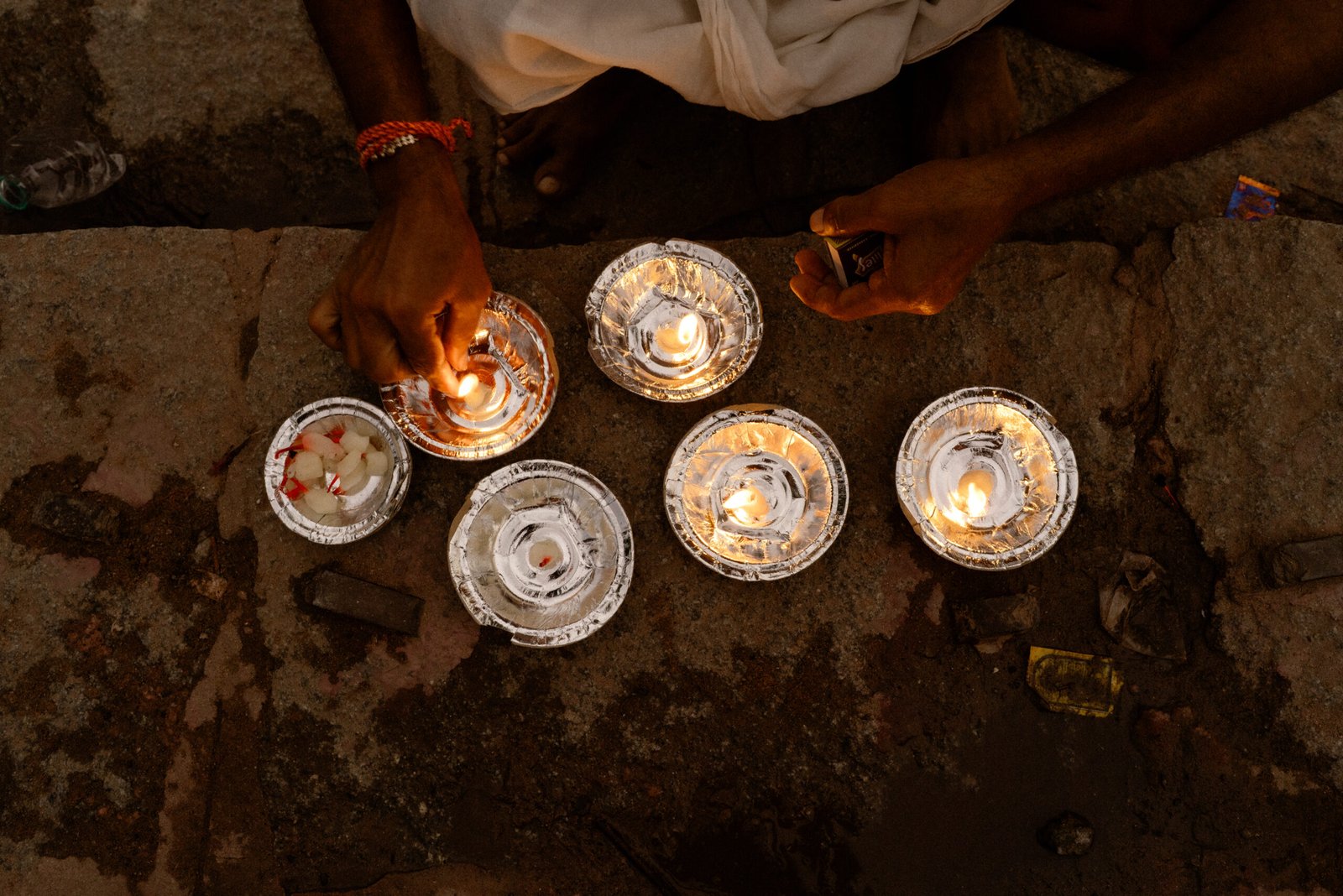
Few people gathered around with plates of offering for the evening aarti (a Hindu ritual where a priest moves around a lamp of burning oil for worship). A priest, clad in orange dhoti and shawl, quickly arrived to begin the process. With the devotees lined up behind, the priest held the burning lamp and moved through the air facing the river. The flames flickered with a calm insistence of something ancient, spilling gold across the creases of the priest’s face. His eyes, half-lowered and lips quivering at the weight of prayer, provided a quiet reflection, not of the fire, but of silence held long enough to become sacred. The scent of wet earth mingled with the incense and burning diyas (small clay lamps), and somewhere a bell rang, its sound echoing across the water like a forgotten hymn.
For the rest of the days, we sometimes traced back our steps to the same places, and other times, we got lost in the cacophony of narrow alleys. Sheltered within time and culture, every brick had a rich weave of history that acted as a recompense for our fickle present. From the bruised walls of forts to the faded frescos of deities, from the crumbling cobblestone roads to the stores drenched in tree roots, the more I wandered, the more my nails seemed dirty from hand-digging the graves of India’s past, where once lingered the laughter, sorrow, life, hope, and the stories that have kept this town suspended in the silence of longing.